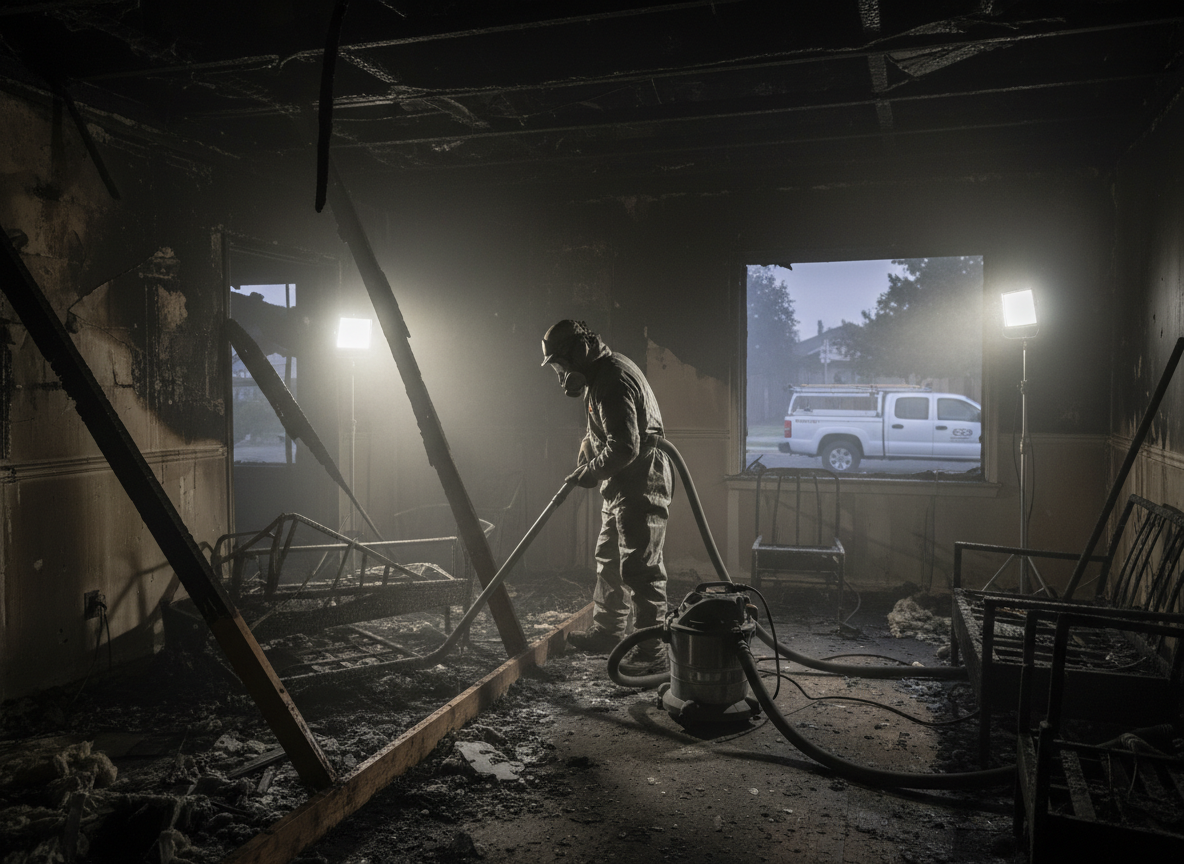
Mentone homes built before the 1980s often feature lath-and-plaster walls and balloon framing that let smoke travel vertically into attics and wall cavities. After a fire, 24 hour fire restoration crews must open these voids immediately because the area’s hot, dry summers pull residual smoke odors back into living spaces once temperatures rise again. Crews use negative-air machines and thermal imaging to locate hidden char before it re-contaminates drywall or insulation.
Zanja Creek properties sit on older alluvial soils that hold moisture differently than the surrounding hills, so water used during suppression can pool under slabs and create secondary mold if extraction is delayed. Technicians on 24 hour calls bring portable extractors and dehumidifiers sized for these conditions rather than standard residential units. San Bernardino County building codes require permits for any structural member replacement, so documentation starts the same night to keep the job moving once the fire department clears the scene.
Nearby Redlands and Yucaipa share the same Mediterranean climate, but Mentone’s smaller lots mean fire-damaged homes often sit closer to neighbors, increasing the chance of smoke migration through shared fences and vents. Restoration teams therefore seal adjoining properties first and use HEPA air scrubbers rated for the county’s typical wind patterns. Homeowners who attempt their own cleanup usually spread soot into carpet and HVAC systems because they lack the containment barriers required on these narrow streets.
Technician insight
In Mentone, the thing that catches most people out with 24 hour fire restoration is how the dry summer winds that blow down from the hills push smoke into the balloon-framed walls of pre-1970 homes along Zanja Creek. Homeowners often think wiping visible surfaces is enough, but once those winds return the odor comes right back through the unsealed cavities.
Attic Soot Migration After Kitchen Fire
A Mentone homeowner on Mentone Blvd reported a small kitchen fire that the fire department extinguished quickly. Inspection showed smoke had traveled through the open ceiling joists into the attic shared with the neighboring unit. Crews sealed the common wall, ran negative air for 48 hours, and cleaned the shared attic insulation before reinstalling drywall. The home passed final air-quality testing and was cleared for occupancy within five days.
How it works
- 1
Emergency Board-Up
Secure openings with plywood and tarps within the first hours to prevent weather and trespass while the fire investigation finishes.
- 2
Soot and Smoke Mapping
Use thermal cameras and air sampling to identify every surface affected, including attics and crawl spaces common in Mentone’s older stock.
- 3
Contents Removal and Cleaning
Pack out salvageable items for off-site cleaning and document everything for insurance before demolition begins.
- 4
Structural Restoration
Remove charred materials, treat remaining surfaces, and rebuild to current San Bernardino County code with proper permits.
Pricing
Upfront written quotes provided after on-site inspection; final cost depends on square footage affected and whether structural members require replacement.