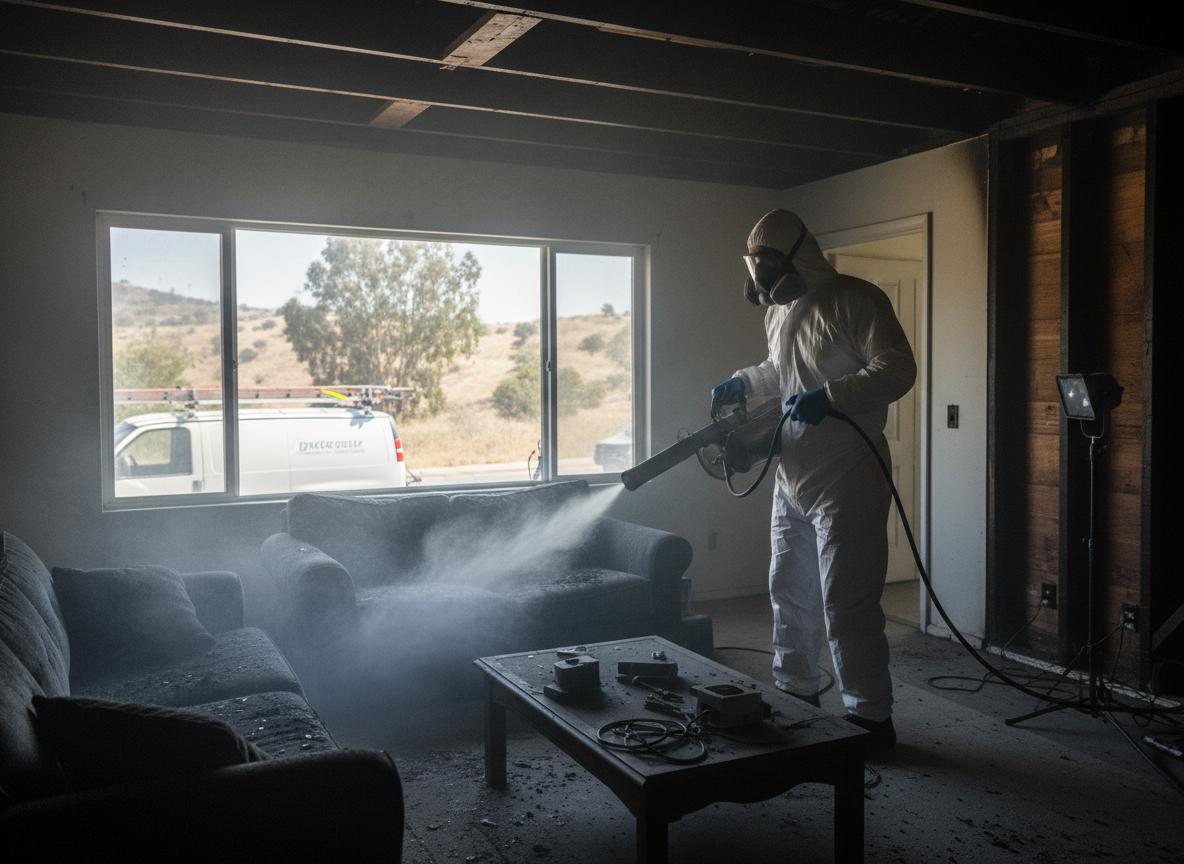
Smoke odors in Mentone homes often settle into porous materials like drywall, insulation, and older plaster found in properties built before the 1980s. Hot dry summers accelerate residue bonding while cool winter evenings allow odors to re-emerge when humidity rises near Zanja Creek. Technicians must address both surface and embedded contamination because standard cleaning leaves volatile compounds that reactivate with temperature swings common in San Bernardino County.
Edge cases appear when fire affects homes close to Mentone Park where wind patterns carry soot into attics and wall cavities. These spaces require negative air machines and thermal fogging to reach hidden deposits without disturbing settled dust that could spread into living areas. Concrete slab foundations common in the area also trap odors beneath flooring, demanding specialized sealers after initial deodorization to prevent recurrence during seasonal weather shifts.
Local building codes in Mentone require proper ventilation during treatment to avoid trapping chemicals in enclosed spaces. Overlooking this step leads to secondary complaints when residents return and notice lingering chemical smells mixed with smoke. Crews document each layer of material treated because incomplete removal forces repeat visits once winter rains raise indoor moisture levels and reactivate odors in untreated wood framing.
Coordination with nearby Redlands and Yucaipa fire departments helps identify the exact fuel sources burned so treatment matches the specific hydrocarbon residues left behind. This prevents using mismatched neutralizers that fail on certain plastics or synthetic furnishings prevalent in Calimesa-adjacent neighborhoods.
Technician insight
In Mentone, the thing that catches most people out with Odor removal after fire is how cool winter nights pull trapped smoke back out of the stucco walls along Zanja Creek properties. Homeowners often clean only visible surfaces and miss the cavities where dry summer soot settled deepest, so the smell returns the first time temperatures drop.
Smoke Odor in Older Mentone Home
A fire in an adjacent structure sent smoke into a 1970s Mentone residence near Zanja Creek. Inspection showed residues had entered wall cavities through unsealed outlets. Crews ran negative air and applied thermal fogging throughout the structure. Odors cleared and did not return after the first winter temperature drop.
How it works
- 1
Initial Assessment
Inspect affected rooms, attics, and wall cavities to map smoke migration patterns influenced by Mentone’s prevailing winds.
- 2
Containment Setup
Isolate zones with plastic barriers and negative air units to stop odor particles from traveling into unaffected areas during treatment.
- 3
Deodorization Application
Apply thermal fogging and hydroxyl generators to penetrate porous surfaces where dry summer residues have bonded.
- 4
Verification and Sealing
Test air quality and apply sealers on remaining substrates before final clearance to block re-release during cool winter nights.
Pricing
Cost depends on square footage treated, depth of smoke penetration into older construction, and whether attics or crawl spaces require access.