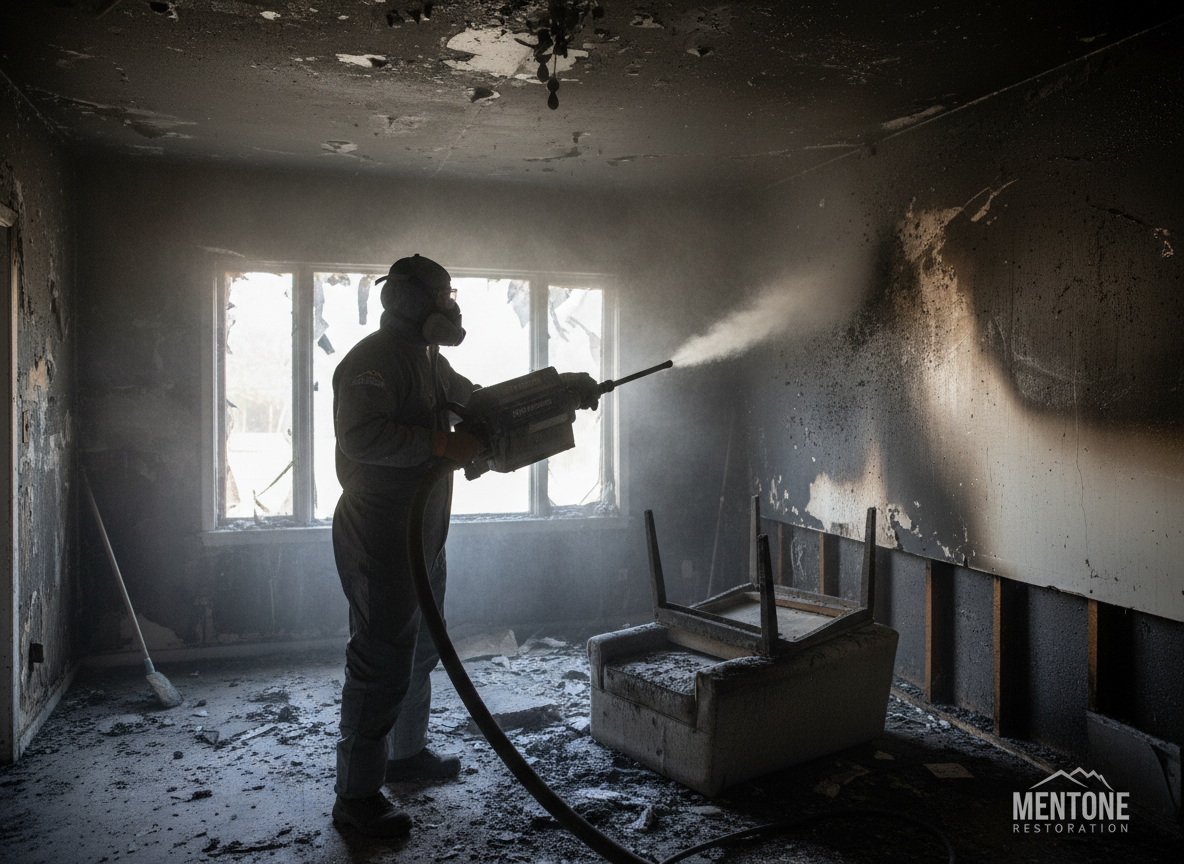
Smoke from wildfires and structure fires travels far in Mentone's hot, dry summers, settling into the older wood-frame homes common along streets near Zanja Creek. Porous materials like drywall, insulation and hardwood floors absorb particulates that standard cleaning misses, leaving persistent odors that worsen during cool winter temperature swings when windows stay closed. Technicians must map airflow paths through attics and crawl spaces typical in San Bernardino County properties to prevent recontamination after initial removal.
In neighborhoods bordering Yucaipa and Calimesa, alkaline residues from burned vegetation and synthetic materials corrode metal fixtures and HVAC coils if not neutralized within days. We use pH-adjusted cleaners matched to the specific smoke type rather than generic deodorizers, then run negative-air machines to pull particles from behind baseboards and inside wall cavities. Homeowners who attempt DIY ozone treatments often push soot deeper into carpet padding and cabinet interiors, increasing the scope of later professional work.
After containment, we inspect ductwork in single-story ranch homes prevalent near Mentone Park because smoke migrates through shared return vents and settles on blower motors. Final clearance testing confirms particulate levels match pre-loss conditions before any reconstruction begins, avoiding callbacks when seasonal winds stir remaining dust.
Technician insight
In Mentone the thing that catches most people out with smoke remediation is how the dry summer winds push fine ash deep into the unsealed crawl spaces under 1960s ranch homes near Zanja Creek; once it mixes with the alkaline soil dust already there, standard cleaners fail and you end up reopening walls weeks later.
Smoke in Attic After Nearby Brush Fire
A home two blocks from Mentone Park had light smoke enter through roof vents during a summer fire in the hills. We found ash settled on insulation batts and inside the HVAC return. Negative-air machines and targeted cleaning removed the residues without disturbing the original plaster ceilings, and testing cleared the property for move-in the same week.
How it works
- 1
Site Assessment
Technicians document smoke migration patterns through the property, noting affected materials and HVAC paths.
- 2
Containment Setup
Plastic barriers and negative air machines isolate work zones to stop cross-contamination into unaffected rooms.
- 3
Residue Removal
HEPA vacuuming and pH-specific cleaning lift soot from surfaces without spreading particles.
- 4
Odor Neutralization
Thermal fogging and hydroxyl generators treat embedded odors in porous materials and air spaces.
- 5
Clearance Verification
Air sampling and surface testing confirm residues meet restoration standards before reoccupancy.
Pricing
Cost depends on square footage affected, smoke type, and whether HVAC or insulation requires replacement.