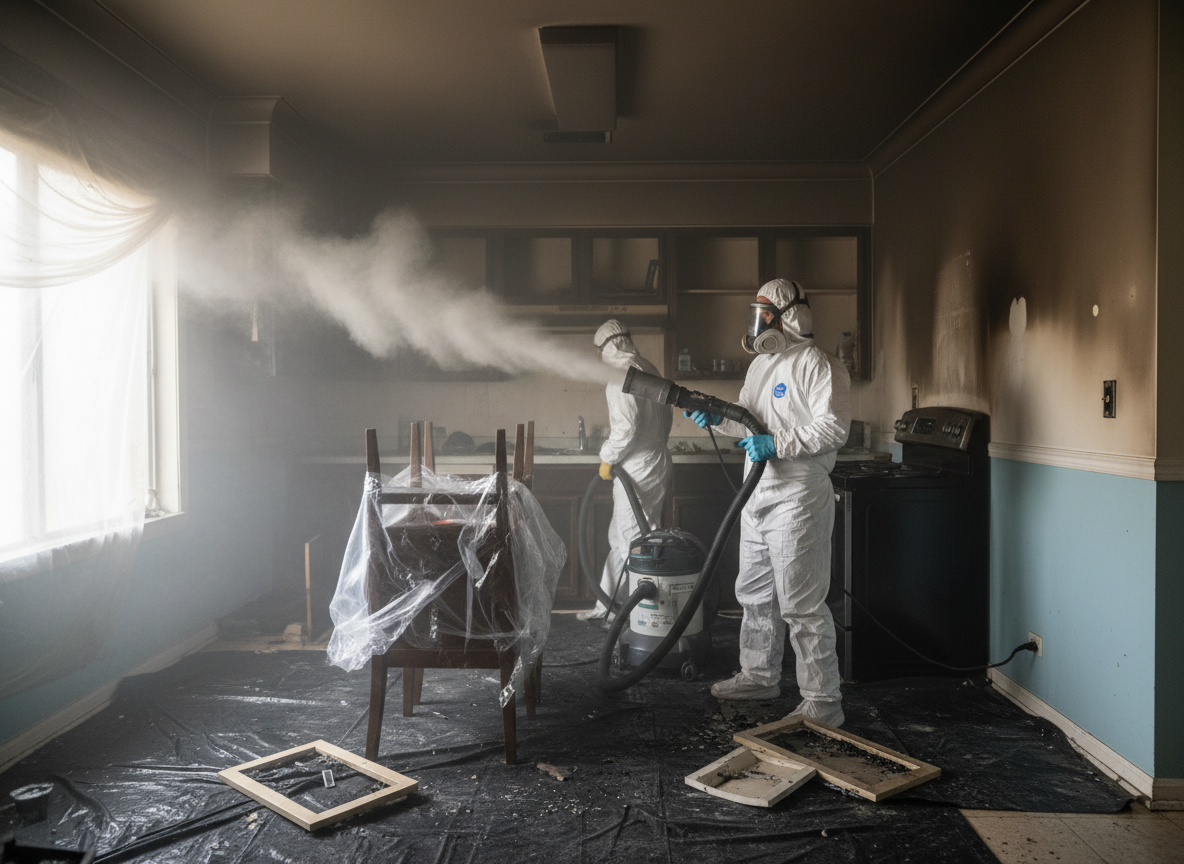
Mentone homes built decades ago often feature wood framing and older HVAC systems that allow smoke particles to travel deep into wall cavities and ductwork. Hot dry summers increase the frequency of regional fires, sending fine soot into residences from Redlands, Yucaipa, and Calimesa. Standard surface cleaning leaves residues that later off-gas when cool winter temperatures cause condensation on interior surfaces. Technicians must test for pH levels on drywall and wood because alkaline smoke from vegetation fires can corrode metal fixtures and etch glass if left untreated.
Zanja Creek runs through parts of Mentone and creates microclimates where humidity lingers longer than on surrounding hills, allowing smoke to bind more stubbornly to stucco and adobe exteriors. Crews use negative-air machines sized for the square footage of single-story ranch homes common here rather than oversized equipment that can disturb settled soot. Odor neutralization requires pairing activated charcoal with thermal fogging because Mentone’s mild winters keep windows closed for weeks, trapping lingering smells inside. Homeowners who attempt DIY vinegar sprays often drive particles deeper into carpet padding and insulation.
San Bernardino County building codes require documentation of smoke migration paths before any reconstruction permit is issued. Restoration teams photograph every room, label affected materials, and note which items can be cleaned on site versus those needing off-site processing. This record protects owners when insurance adjusters question the scope of work in neighborhoods bordering the foothills where wind patterns shift rapidly during fire season.
Technician insight
In Mentone the thing that catches most people out with smoke damage restoration is how the dry summer air lets fine soot travel through the gaps around single-pane windows common in older homes near Zanja Creek, then cool winter nights pull it back into the living spaces weeks later.
Smoke infiltration after nearby vegetation fire
A single-story home two blocks from Mentone Park showed no visible char but every fabric surface smelled of smoke after a summer fire in the foothills. Testing revealed soot had entered the original ductwork and settled in the crawlspace insulation. Crews isolated the HVAC, performed staged cleaning, and ran air scrubbers for five days until readings cleared.
How it works
- 1
Initial Assessment
Technicians inspect every room, test surfaces for soot pH, and map HVAC pathways to determine smoke migration in the specific Mentone property.
- 2
Containment Setup
Plastic barriers and negative air pressure isolate affected zones to prevent cross-contamination into unaffected areas of the home.
- 3
Surface Cleaning
HEPA vacuums and specialized sponges remove loose soot from walls, ceilings, and contents before deeper treatments begin.
- 4
Odor Neutralization
Thermal fogging combined with activated charcoal filters addresses embedded smoke odors that standard cleaning cannot reach.
- 5
Final Verification
Air quality readings and visual inspections confirm residues are removed before any reconstruction or return of belongings.
Pricing
Pricing varies by square footage affected, material types, and whether HVAC cleaning or contents processing is required.