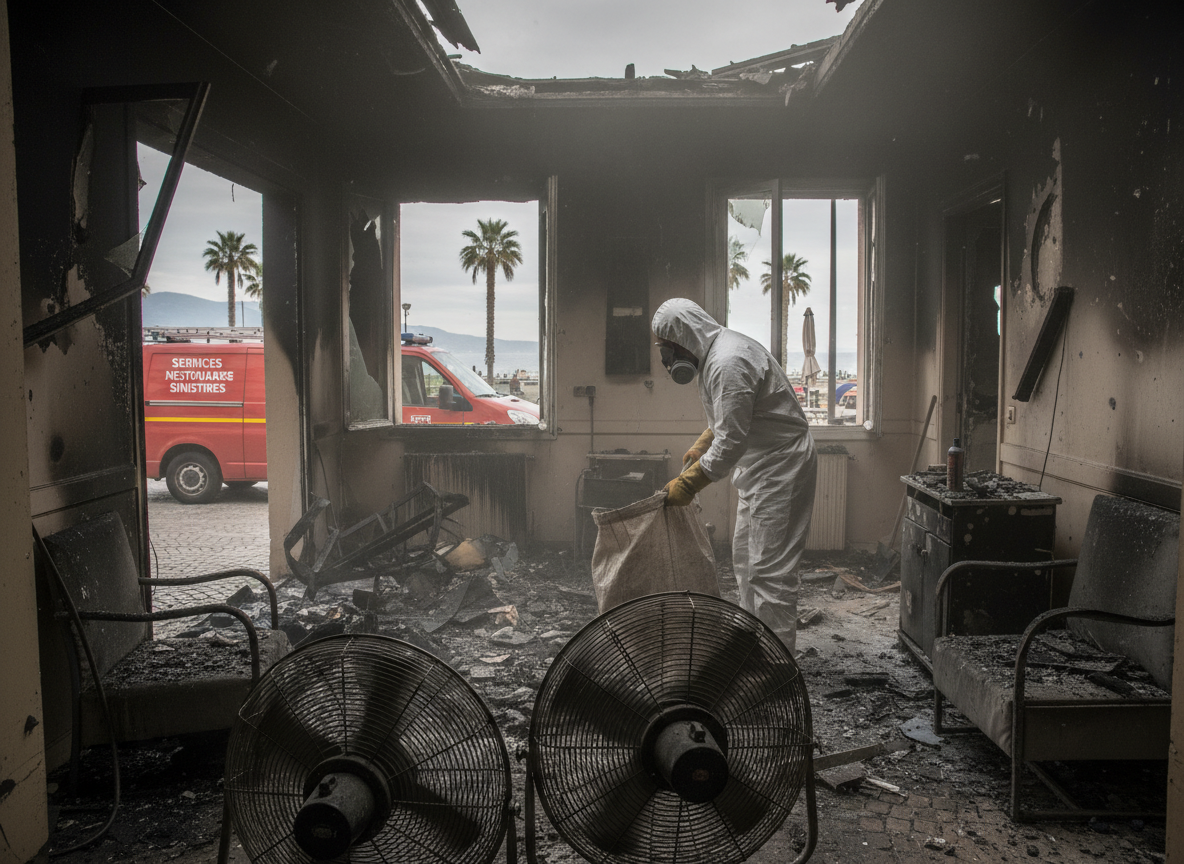
Apartment fires in Mentone often spread through shared ventilation and older wood-frame construction common near Zanja Creek. Hot dry summers accelerate soot adhesion to drywall and HVAC systems while cool winters slow drying of any water used during suppression. Technicians must isolate units quickly to prevent cross-contamination into neighboring apartments in complexes along Mentone Boulevard. Residue from synthetic furnishings settles into carpet pads and behind baseboards faster in the region's low-humidity air, requiring HEPA vacuuming followed by chemical neutralization rather than simple wiping.
Code requirements in San Bernardino County mandate removal of all charred materials and verification that no hidden combustion byproducts remain in wall cavities. In Mentone's older rental stock, lath-and-plaster walls can trap smoke deeper than modern drywall, so inspectors use borescopes and air sampling before clearance. Nearby Redlands and Yucaipa apartments share similar construction, but Mentone's proximity to open terrain means wind-driven smoke can enter through unsealed utility penetrations more readily during Santa Ana events. Failure to address these paths leaves persistent odors that return after tenants move back in.
Contents cleaning for apartment residents includes on-site ultrasonic treatment for small items and off-site processing for textiles and electronics. Porous materials like mattresses and upholstered furniture in units near Calimesa are typically non-salvageable after heavy smoke exposure. Crews document every item with photos before disposal to support insurance claims. Final air scrubbing runs for 48 to 72 hours using negative air machines sized for the unit square footage to meet post-fire indoor air quality standards.
Technician insight
In Mentone the thing that catches most people out with apartment fire cleanup is how the dry summer air lets fine soot travel through the old shared ductwork in buildings near Zanja Creek. Homeowners assume wiping visible surfaces is enough, but the residue stays suspended and redeposits weeks later once the AC kicks on during cooler evenings.
Kitchen fire spread in Mentone apartment
A cooking fire in a second-floor unit near Mentone Park sent smoke through the central HVAC into three neighboring apartments. Inspection showed heavy soot inside the ductwork and behind baseboards in units built in the 1970s. Crews isolated the system, removed all affected drywall sections, cleaned the ducts, and ran hydroxyl treatment until air tests cleared the building for reoccupancy.
How it works
- 1
Initial Assessment
Technicians arrive within hours, document all affected units, and test for hidden smoke migration through shared walls and vents.
- 2
Containment and Safety
Plastic barriers and negative air machines isolate the fire unit from hallways and adjacent apartments to stop soot spread.
- 3
Soot and Residue Removal
HEPA vacuums, sponges, and approved cleaners remove dry and wet smoke deposits from surfaces, HVAC, and contents.
- 4
Odor Neutralization and Clearance
Ozone or hydroxyl generators treat remaining odors followed by air sampling to confirm the unit meets habitability standards.
Pricing
Pricing varies by fire size, number of affected units, and smoke penetration depth; upfront quotes provided after inspection.