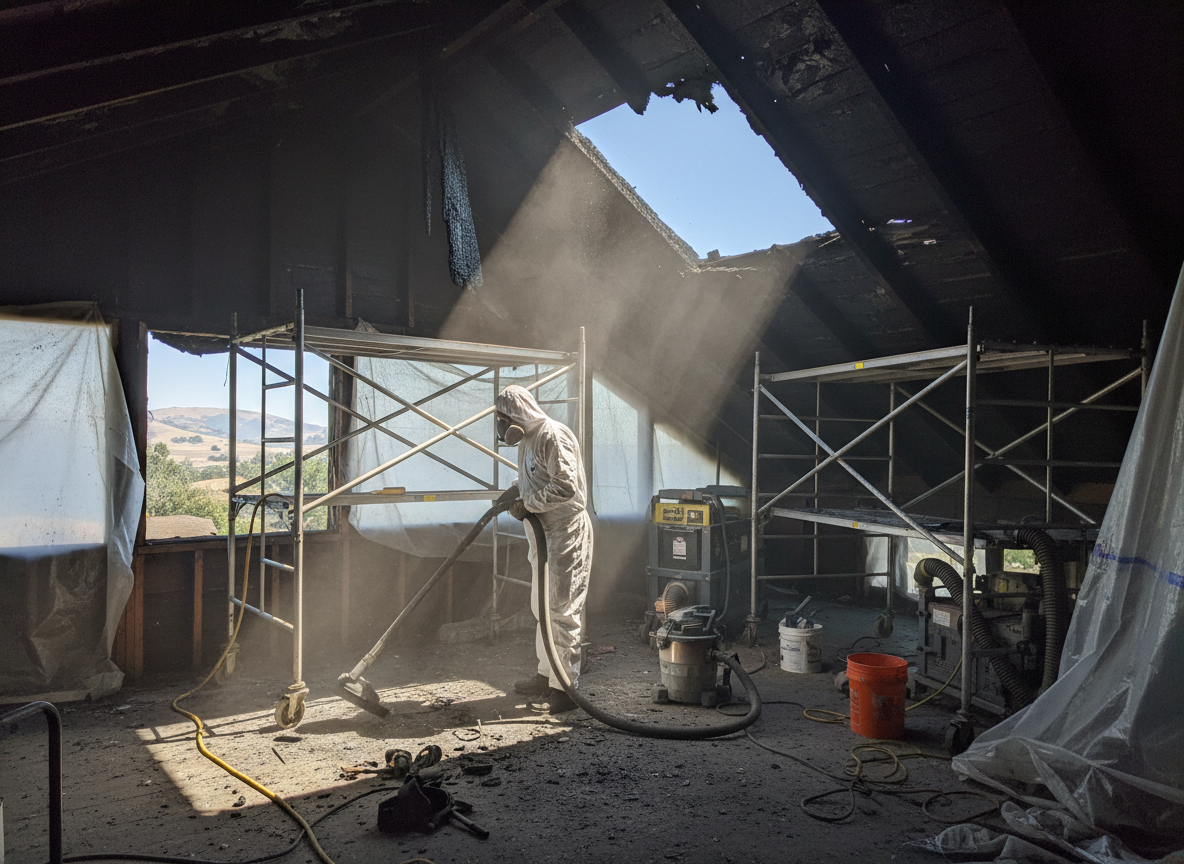
Mentone homes built from the 1950s through the 1980s often feature older truss systems and fiberglass batt insulation that ignite quickly during attic fires. Hot dry summers typical of San Bernardino County increase the risk of embers traveling from nearby brush into vents near Zanja Creek or along Mentone Park. Once flames reach the attic, heat can travel down wall cavities into living spaces, requiring removal of ceiling drywall and inspection of electrical runs that may have melted. Restoration crews must also address soot that settles on rafters and into HVAC ducts common in these single-story ranch styles.
Cool winter nights in Mentone can cause condensation inside an already compromised attic after fire suppression, leading to mold growth on charred wood if drying is delayed. Crews pull damaged insulation, treat remaining framing with antimicrobial solutions, and install new fire-rated materials to meet current San Bernardino County building standards. Edge cases include homes near Yucaipa or Calimesa where shared property lines limit equipment access, forcing manual debris removal through narrow attic hatches. Proper documentation of pre-existing wear on older roof decks helps avoid disputes during insurance claims.
Seasonal Considerations for Attic Fires
Dry summer conditions in Mentone mean fires often start from electrical faults in older knob-and-tube wiring still found in some homes near Redlands Road. Winter restoration work requires tarping roof openings quickly to prevent rain from soaking exposed sheathing, which can warp and require full deck replacement.
Technician insight
In Mentone, the thing that catches most people out with attic fire restoration is how quickly smoke travels down the open wall cavities of 1960s ranch homes near Zanja Creek; homeowners think the damage stops at the ceiling but we often find melted wiring two stories down because the dry summer air lets soot travel farther before settling.
Hidden Char in 1970s Attic Near Mentone Park
A fire started in an attic above a bedroom during a hot August evening. We found char extending along truss chords into two adjacent rooms and soot inside the HVAC plenum. Insulation was removed, framing treated, and new fire-rated batts installed before drywall replacement. The home passed final inspection and the family returned within three weeks.
How it works
- 1
Initial Assessment
Technicians inspect the attic structure, identify char depth on rafters, and document smoke migration paths through the home.
- 2
Containment and Safety
Negative air machines are set up and affected areas are isolated to prevent soot spread into undamaged rooms.
- 3
Debris and Insulation Removal
Charred materials and contaminated insulation are removed, followed by HEPA vacuuming of remaining surfaces.
- 4
Structural Repairs and Drying
Damaged framing is replaced or reinforced, then the space is dried before new insulation and drywall installation.
- 5
Final Cleaning and Verification
All surfaces receive odor-sealing treatment and air quality testing confirms the attic is safe for re-entry.
Pricing
Pricing varies by attic size, extent of hidden char, and whether roof decking must be replaced; upfront written estimates are provided after the initial inspection.