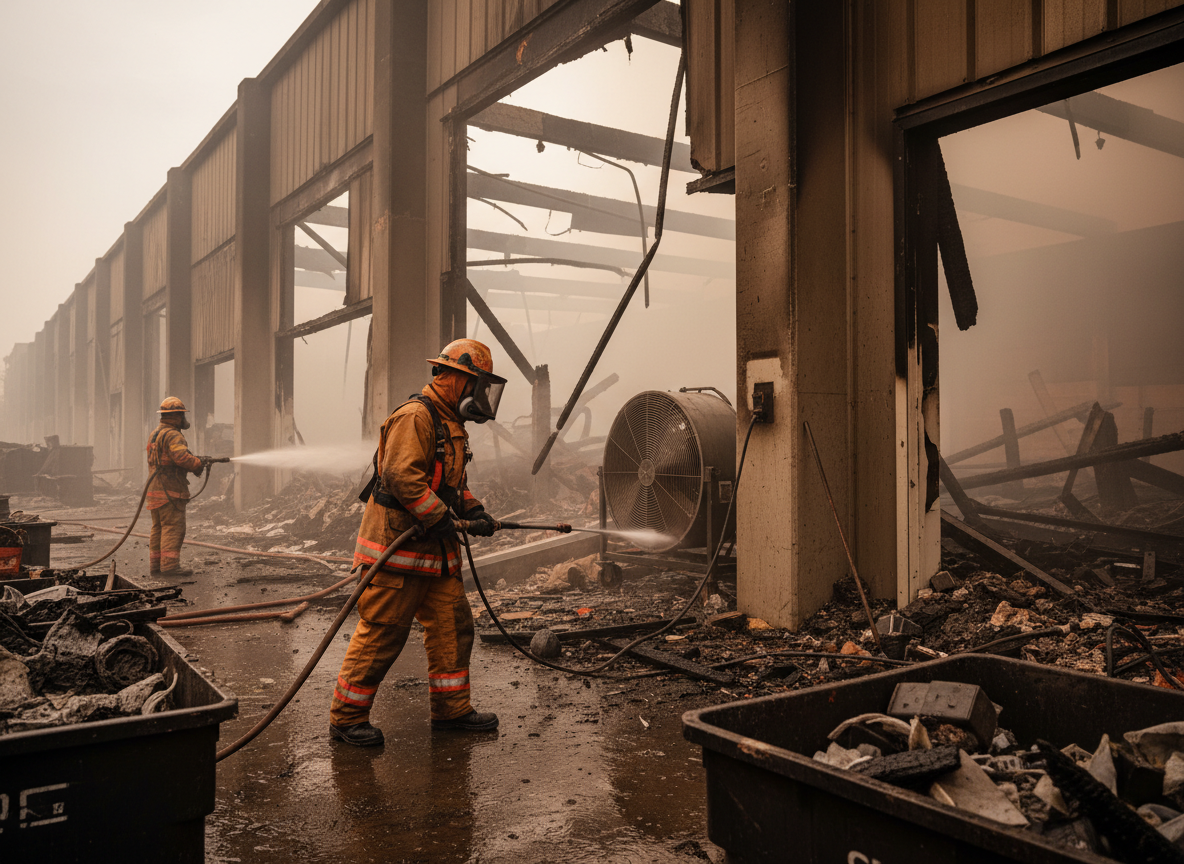
Commercial properties in Mentone face distinct challenges during fire events because of the region's hot dry summers that accelerate smoke migration through HVAC systems common in older retail and light industrial buildings near Zanja Creek. Restoration crews must isolate ventilation early to prevent soot from embedding in drop ceilings and insulation found in structures built before current energy codes. San Bernardino County requirements for commercial occupancy often mandate post-fire air quality testing before tenants can re-enter spaces.
Edge cases frequently arise when fires originate in adjacent units in strip malls along Mentone Boulevard and travel through shared walls into Redlands or Yucaipa border properties. Crews inspect for hidden char in metal framing and electrical conduits that can compromise future loads. Cool winter nights increase condensation risks on cooled surfaces, requiring dehumidification protocols that differ from summer jobs where low humidity speeds drying but raises dust.
Work on commercial sites also involves coordinating with local fire marshals on debris removal timelines and temporary power setups that keep neighboring businesses operational. Materials like concrete tilt-up walls common in Calimesa industrial parks retain heat longer than wood-frame construction, changing the sequence of cleaning versus demolition decisions.
Technician insight
In Mentone, the thing that catches most people out with Commercial fire restoration is how the dry summer winds push smoke under the metal roofing common on buildings near Mentone Park, leaving residue in insulation that later off-gasses when the first cool winter front moves through.
Retail Strip Mall Fire Near Zanja Creek
A kitchen fire in one unit spread smoke through shared ductwork into two neighboring commercial spaces. Inspection revealed heavy soot deposits in ceiling cavities and HVAC returns. Crews isolated the systems, performed staged cleaning, and completed verification testing before the county allowed reopening.
How it works
- 1
Initial Assessment
Technicians arrive within hours, document all affected commercial spaces, and map smoke paths through the building's mechanical systems.
- 2
Containment and Safety
Barriers and negative air setups prevent cross-contamination while crews secure utilities and remove immediate hazards.
- 3
Soot and Residue Removal
Specialized equipment cleans surfaces, HVAC ducts, and contents before odor neutralization begins.
- 4
Restoration and Verification
Repairs restore the space to pre-loss condition followed by third-party air quality checks required for re-occupancy.
Pricing
Upfront quotes provided after on-site inspection; scope determines final cost.