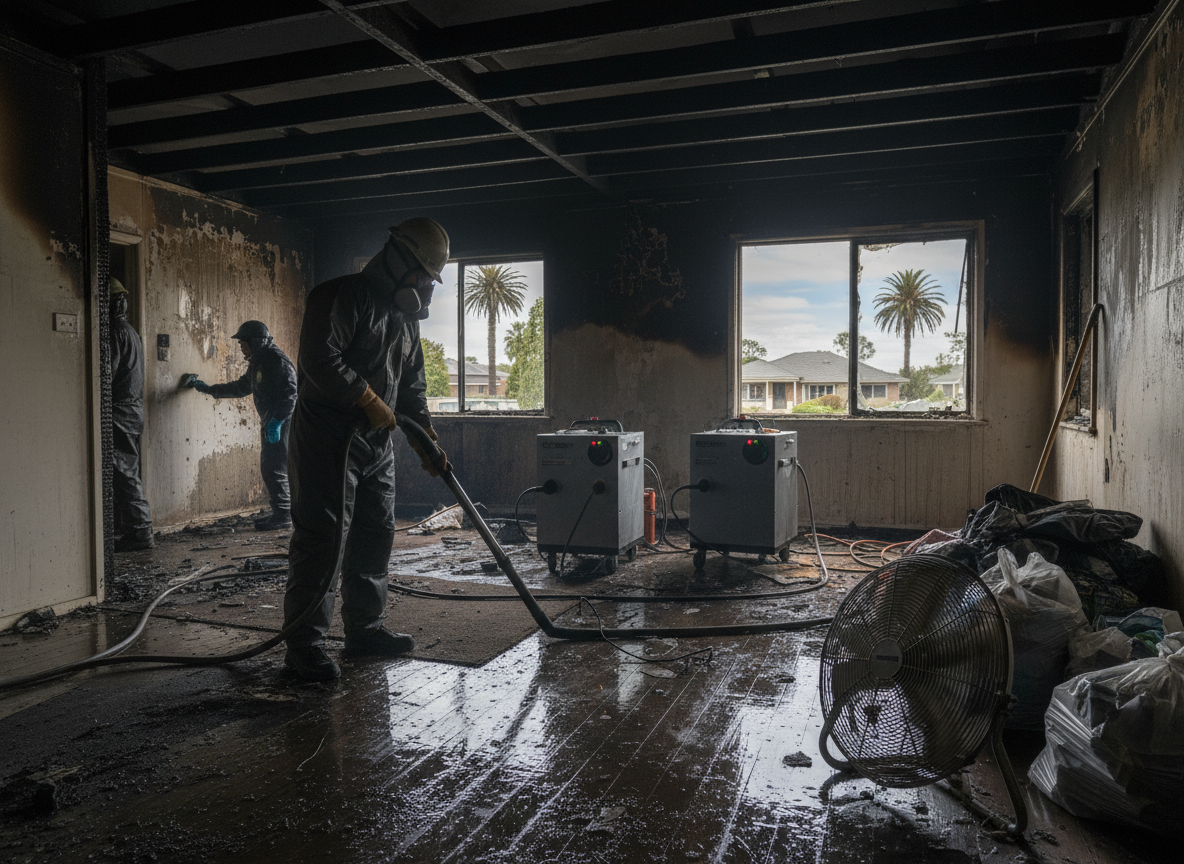
Mentone sits in a mild Mediterranean climate where hot, dry summers drive elevated fire risk and cool winters bring occasional heavy rain that can turn fire-damaged structures into flood problems. Older single-family homes built before modern fire codes often feature wood framing and outdated electrical systems that allow fire to travel quickly into attics and wall cavities. When rain follows, water enters through compromised roofs and siding, saturating insulation and subfloors near Zanja Creek low-lying lots.
Restoration crews must first stabilize the structure against both smoke residue and subsequent water intrusion. In neighborhoods close to Mentone Park, crews frequently encounter stucco exteriors over older lath that trap moisture after fire suppression efforts, leading to hidden rot that only appears weeks later. Proper drying requires targeted dehumidification rather than whole-house fans, because the local soil retains moisture longer than surrounding Redlands or Yucaipa properties on higher ground.
Secondary flooding after a fire is common when winter storms hit burn-scarred lots in Calimesa-adjacent areas. Technicians check for compromised grading and drainage around foundations before any finish work begins. Materials such as gypsum board and particleboard subflooring must be removed rather than dried in place, because residual soot combined with water creates ongoing odor and microbial issues that standard cleaning cannot resolve.
Technician insight
In Mentone, the thing that catches most people out with Fire and flood restoration is how the dry summer fire season followed by winter rains along Zanja Creek can push water into fire-weakened crawl spaces of pre-1970s homes, creating hidden mold that only shows after finishes are reinstalled.
Post-Fire Rain Intrusion on Mentone Blvd
A home near 1930 Mentone Blvd suffered attic fire damage during a summer event. Winter storms then drove water through the compromised roof into wall cavities. Crews removed saturated insulation, dried the framing, and replaced affected drywall before odors developed.
How it works
- 1
Site Assessment
Technicians document all fire and water damage, test for hidden moisture, and identify structural concerns specific to Mentone construction.
- 2
Stabilization
Temporary boarding, tarping, and water extraction prevent additional harm from rain or wind common in the region.
- 3
Cleaning and Drying
Soot removal and controlled drying address both fire residues and any flood water introduced through damaged envelopes.
- 4
Restoration and Verification
Repairs restore the property, followed by final moisture and air-quality checks before occupants return.
Pricing
Costs depend on the combined scope of fire and water damage; upfront quotes are provided after on-site evaluation.