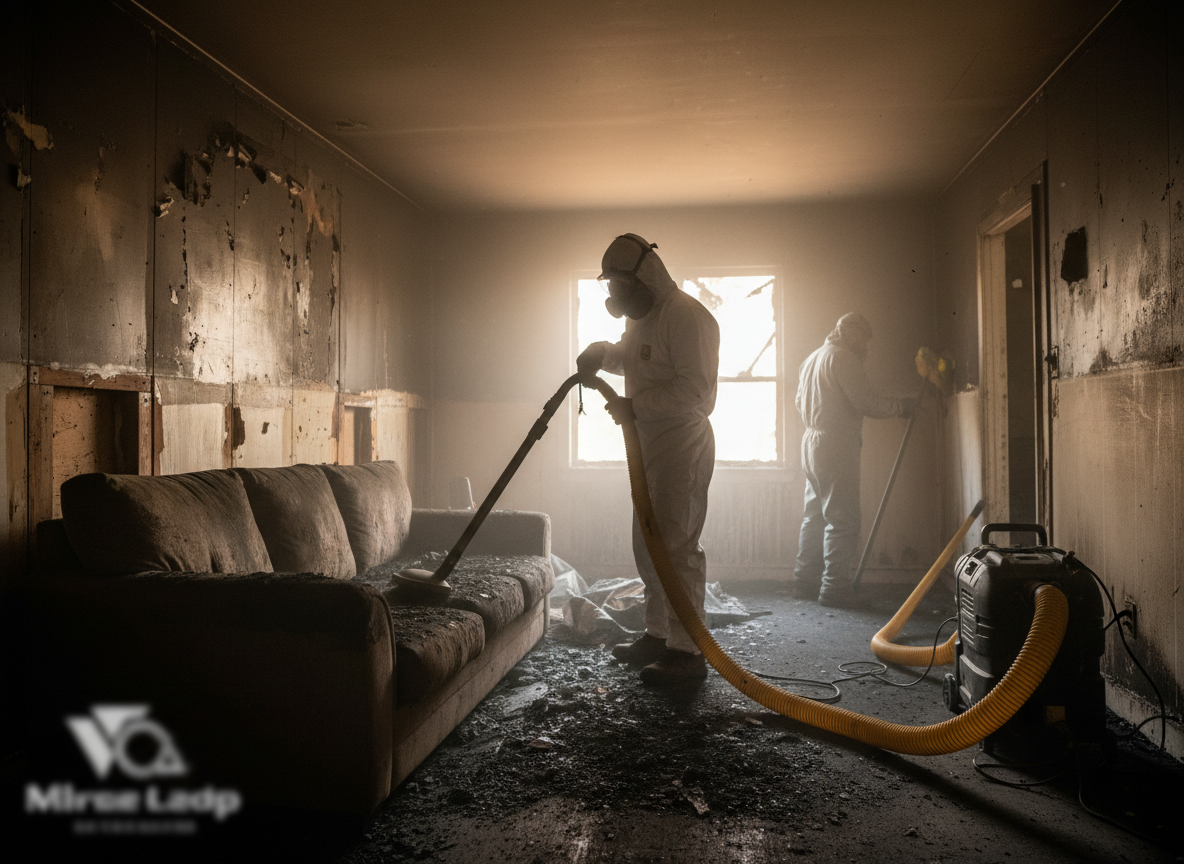
Mentone homes built before the 1980s often feature wood framing and stucco that allow smoke to travel deep into wall cavities and attics during the hot dry summers common in San Bernardino County. When a fire occurs near Zanja Creek, the low humidity lets soot bond to surfaces faster than in coastal regions, requiring specialized alkaline cleaners rather than standard detergents. Restoration crews must also watch for hidden ember damage in older electrical systems that can reignite if not fully addressed.
Smoke from fires in nearby Redlands or Yucaipa frequently migrates into Mentone properties through shared wind patterns along the foothills. This creates odor issues in HVAC systems and insulation that standard ozone treatments alone cannot resolve without first removing affected materials. Crews here routinely cut out sections of drywall up to the ceiling line in rooms adjacent to the fire origin to prevent recurring smells after reconstruction.
Post-fire water used by local fire departments can pool against foundations near Calimesa due to the area's slight slopes, leading to secondary mold growth if extraction is delayed. Restoration work in these cases includes checking soil saturation around the structure and using moisture meters on concrete slabs before any new flooring is installed. Homeowners in Mentone Park neighborhoods often overlook this step because the initial fire damage appears contained to upper levels.
Technician insight
In Mentone, the thing that catches most people out with fire and smoke damage restoration is how the dry summer winds push smoke into the crawl spaces of older homes along Zanja Creek, where it settles into the soil and reappears weeks later if the underfloor insulation is not removed.
Kitchen Fire Smoke in Mentone Home
A cooking fire filled a single-story home near Mentone Park with smoke that traveled through the attic. Inspection showed soot on rafters and inside ductwork. Crews removed affected insulation, cleaned all surfaces, and replaced HVAC filters. The home passed final odor testing and was ready for occupancy without further issues.
How it works
- 1
Initial Assessment
Technicians inspect all affected rooms, attics, and HVAC systems for smoke migration and hidden ember damage while documenting conditions for insurance.
- 2
Containment and Safety
Plastic barriers and negative air machines isolate the work area to prevent soot spread to unaffected parts of the home.
- 3
Cleaning and Odor Removal
Specialized equipment removes soot from surfaces, followed by thermal fogging and air scrubbing to neutralize odors in wood and fabric.
- 4
Restoration and Repairs
Damaged drywall, insulation, and trim are replaced, with final verification that no residual smoke remains before reconstruction.
Pricing
Cost depends on square footage affected, depth of smoke penetration, and whether contents cleaning is required.