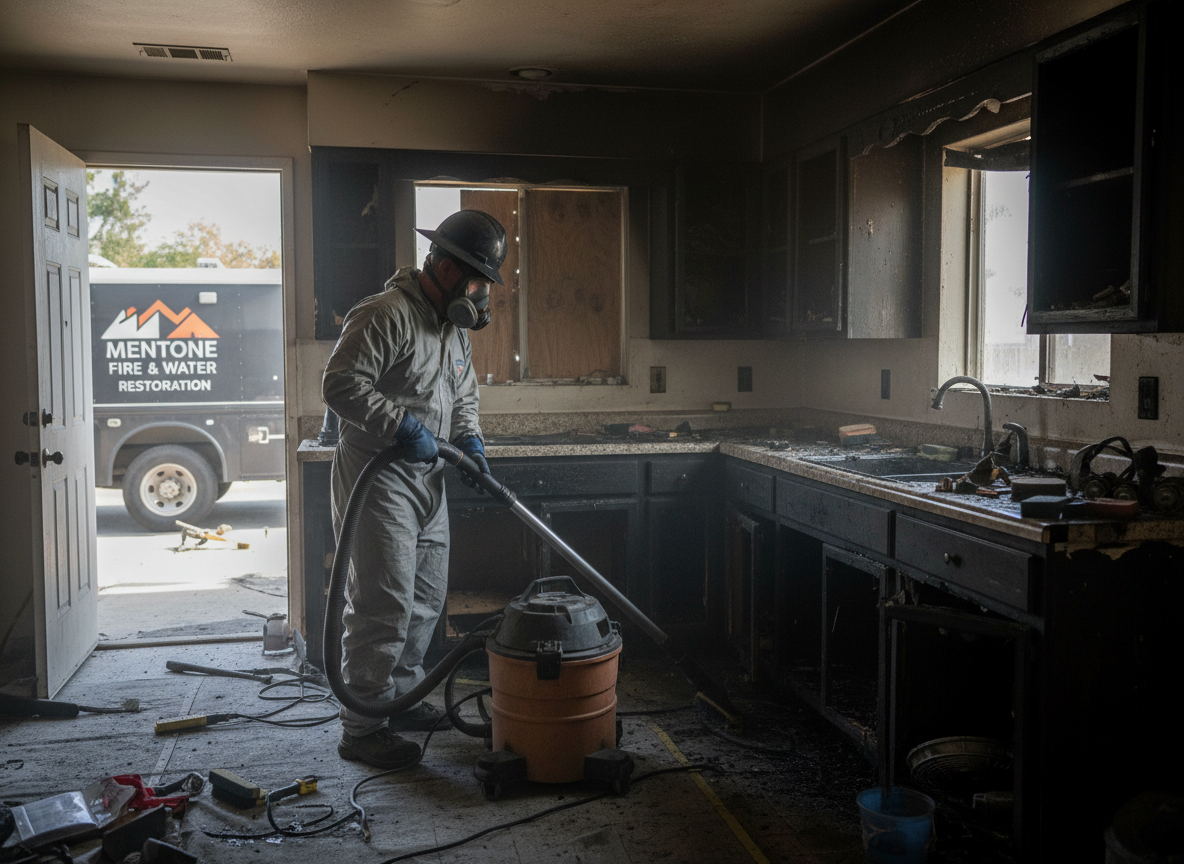
Mentone sits in San Bernardino County with a mix of older single-story homes and some newer builds near Zanja Creek. Hot, dry summers increase wildfire ember exposure while cool winters bring occasional heavy rain that can saturate charred wood and drywall. Restoration crews must account for both the initial smoke penetration through unsealed stucco and the later risk of hidden moisture that leads to mold if not dried within the first 48 hours.
Properties close to Mentone Park often have mature landscaping that can carry fire to eaves and attic vents. Crews check for hidden char in rafters and insulation, especially in homes built before modern fire codes tightened. Ash and soot travel easily through the mild Mediterranean air patterns, settling inside HVAC systems that run year-round in this climate.
After any structure fire, the first priority is securing the building against the next rain event that can reach the area in winter. We remove charred debris, clean remaining surfaces with appropriate agents, and document every step for insurance adjusters who handle San Bernardino County claims. Homes near Redlands, Yucaipa, and Calimesa share the same seasonal fire and weather risks, so the same protocols apply when residents call from those nearby cities.
Technician insight
In Mentone, the thing that catches most people out with fire damage restoration near me is how quickly winter rain hits after a summer fire. Charred roof decks near Zanja Creek absorb water fast and push it into wall cavities that look fine from the outside, so we always pull baseboards early and check for hidden saturation before any drywall goes back up.
Ember intrusion through attic vents
A homeowner near Mentone Park noticed smoke inside after a small brush fire. We found embers had entered through older attic vents and smoldered in insulation. After removing the affected material and cleaning the rafters, we dried the space and replaced insulation before any rain could reach the area.
How it works
- 1
Emergency Board-Up
Secure openings to prevent weather and unauthorized entry while the structure is assessed.
- 2
Soot and Ash Removal
Clean all surfaces and HVAC systems to stop smoke odor from migrating through the house.
- 3
Structural Drying
Use targeted drying equipment to remove moisture introduced during firefighting or winter rains.
- 4
Rebuild and Finish
Replace damaged materials and restore the home to pre-loss condition with local code compliance.
Pricing
Upfront quotes provided after on-site inspection; final cost depends on fire size, affected square footage, and any secondary water damage.