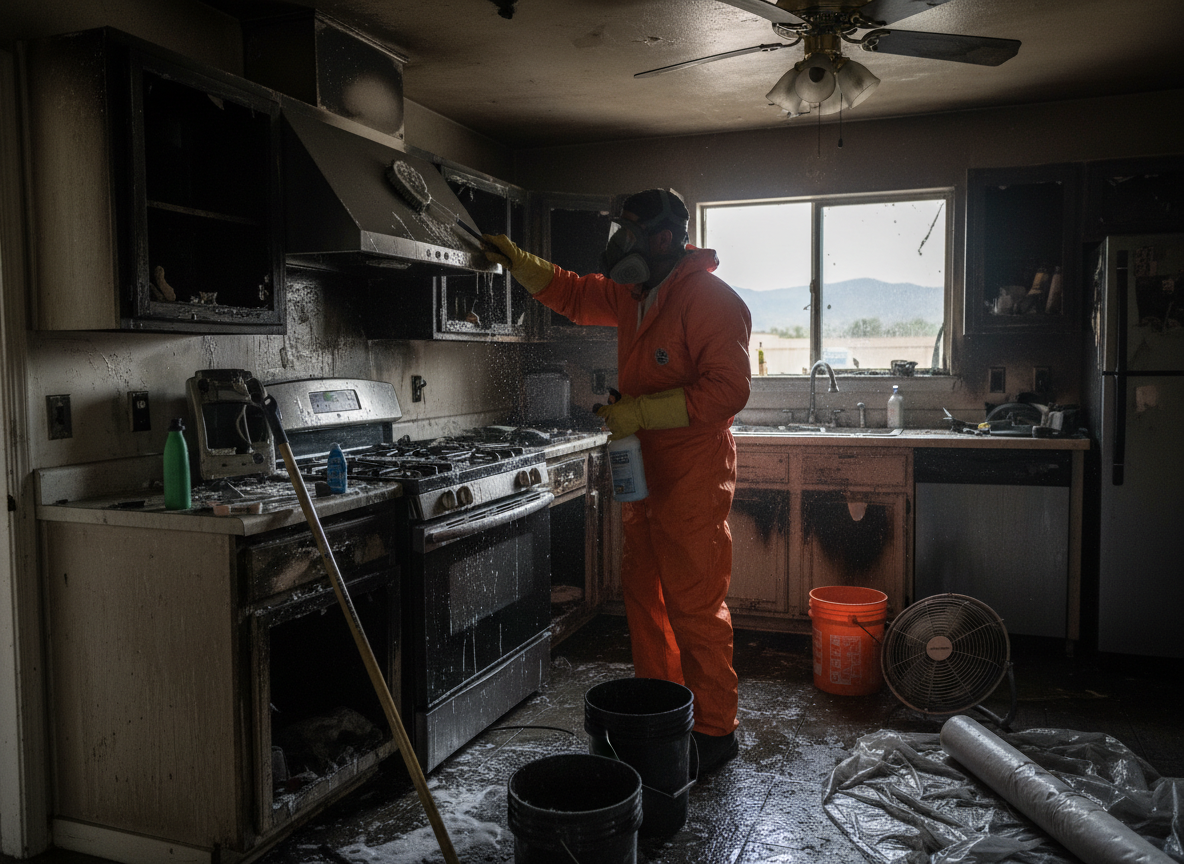
Kitchen fires in Mentone often start from grease ignition or unattended stoves, common in the area's older single-family homes built before updated electrical codes. Hot dry summers in San Bernardino County increase the chance that embers travel through vents and settle in attics, while cool winters bring more indoor cooking that can overload older range hoods. Residences near Zanja Creek or Mentone Park frequently feature wood framing and plaster walls that absorb smoke odors deeply, requiring removal of affected insulation and multiple rounds of thermal fogging rather than simple surface wiping.
Technicians must test for hidden corrosion on copper wiring and HVAC coils because alkaline soot from kitchen fires reacts with moisture from winter rains. In neighborhoods close to Redlands and Yucaipa, many homes share similar 1960s-1980s construction with limited attic access, so crews use borescopes to locate residue behind cabinets and in ductwork. Failure to address these pockets leads to recurring odors months later when temperatures rise again.
Cleanup follows IICRC S700 standards for fire damage, beginning with safety shutdown of utilities and HEPA vacuuming to capture loose particulates before any demolition. Porous materials like drywall and cabinetry near the stove are removed to the nearest stud if charring is present, while non-porous surfaces receive degreasing agents formulated for protein-based smoke. Final air scrubbing runs for several days to reduce VOC levels before homeowners return.
Local terrain around Calimesa and Mentone means crews often work on sloped lots where soot can migrate downward into crawl spaces, requiring extra containment barriers during debris removal.
Technician insight
In Mentone, the thing that catches most people out with kitchen fire cleanup is how quickly soot travels through the shared attic spaces of 1970s tract homes near Zanja Creek during our hot, dry summers; homeowners try wiping surfaces themselves and just push the alkaline residue deeper into the plaster.
Range-Top Grease Fire on Mentone Blvd
A cooking fire spread from a stove to nearby cabinets in a 1978 home. Inspection showed smoke had entered the attic through vent ducts and settled on insulation. Crews removed affected drywall and insulation, cleaned the HVAC, and ran air scrubbers for three days until odors cleared.
How it works
- 1
Safety and Containment
Secure the site, shut off utilities, and set up negative air machines to prevent soot spread through Mentone homes.
- 2
Assessment and Documentation
Inspect for hidden damage in attics, ducts, and behind walls using moisture meters and borescopes.
- 3
Removal of Affected Materials
Extract charred cabinetry, insulation, and drywall while protecting unaffected areas.
- 4
Cleaning and Odor Neutralization
Apply degreasers and thermal fogging, then run air scrubbers until readings meet clearance levels.
- 5
Reconstruction and Final Inspection
Replace removed materials and verify no lingering smoke residue before returning the home.
Pricing
Costs depend on the square footage affected, depth of smoke penetration into older plaster walls, and whether HVAC systems require full cleaning.