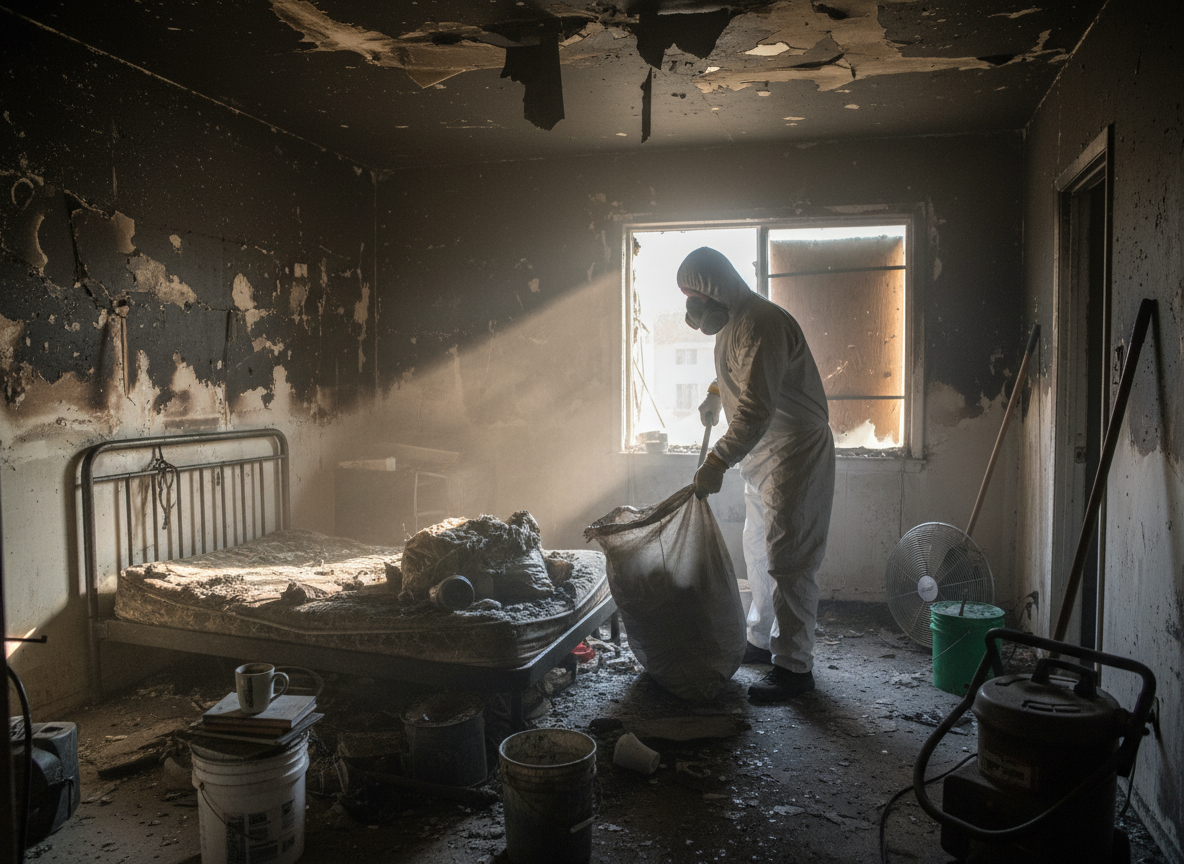
Tenant fire damage cleanup in Mentone often involves older wood-frame rentals built before modern fire codes, where smoke travels through unsealed walls and attics. Hot dry summers pull soot deeper into drywall and insulation around Zanja Creek properties, while cool winter nights slow drying and raise the risk of secondary mold on wet materials left behind after suppression. Technicians must separate tenant belongings from landlord fixtures quickly to avoid disputes, using HEPA vacuums and chemical sponges on textured ceilings common in Yucaipa-adjacent homes.
Redlands and Calimesa rentals frequently have popcorn ceilings and laminate flooring that trap odors and require multiple passes with odor-neutralizing agents. Crews document every item removed for insurance and landlord records, paying special attention to kitchen cabinets where grease and smoke combine. Failure to address hidden char in subfloors near Mentone Park leads to recurring smells months later when tenants return.
Work in these units requires coordination with property managers to secure temporary housing while contents are inventoried and cleaned off-site. Dry Mediterranean conditions mean ash outside can re-enter through open windows during the job, so negative air machines run continuously. Final clearance testing checks for VOCs in carpet pads and behind baseboards before tenants move back in.
Technician insight
In Mentone the thing that catches most people out with tenant fire damage cleanup is how quickly smoke bonds to the unpainted wood framing in 1970s rentals near Zanja Creek during our hot dry summers. Tenants try to wipe surfaces themselves and push soot deeper into the grain, forcing us to sand and reseal more material than if we had started immediately. The cool winter nights also keep moisture trapped behind cabinets, turning a one-week job into two when mold appears.
Kitchen Fire in Mentone Duplex
A cooking fire in a Mentone duplex spread smoke through shared vents into both units. We found heavy soot on popcorn ceilings and inside HVAC returns that had circulated for two days. Crews contained the second unit, removed tenant clothing and furniture for off-site cleaning, and treated all surfaces before reinstalling cleaned items. Property management approved re-occupancy after clearance testing showed no lingering odors.
How it works
- 1
Initial Assessment
Technician inspects all rooms, documents smoke migration paths through vents and walls, and notes which items belong to the tenant versus the landlord.
- 2
Containment and Safety
Plastic barriers seal affected areas, power is isolated where wiring may be compromised, and air scrubbers begin running to capture loose soot.
- 3
Contents Removal and Cleaning
Belongings are tagged, packed, and moved to a cleaning facility while surfaces receive HEPA vacuuming and chemical sponge treatment.
- 4
Structural Restoration
Charred materials are removed, odors neutralized, and surfaces sealed before new finishes are applied to match existing rental standards.
- 5
Final Clearance
Air quality testing and walkthrough with property management confirm the unit meets habitability requirements for tenant re-entry.
Pricing
Pricing varies by square footage affected, depth of smoke penetration, and whether contents require off-site processing.