2026-10-16 ·
Assessing Structural Damage After a House Fire in Mentone
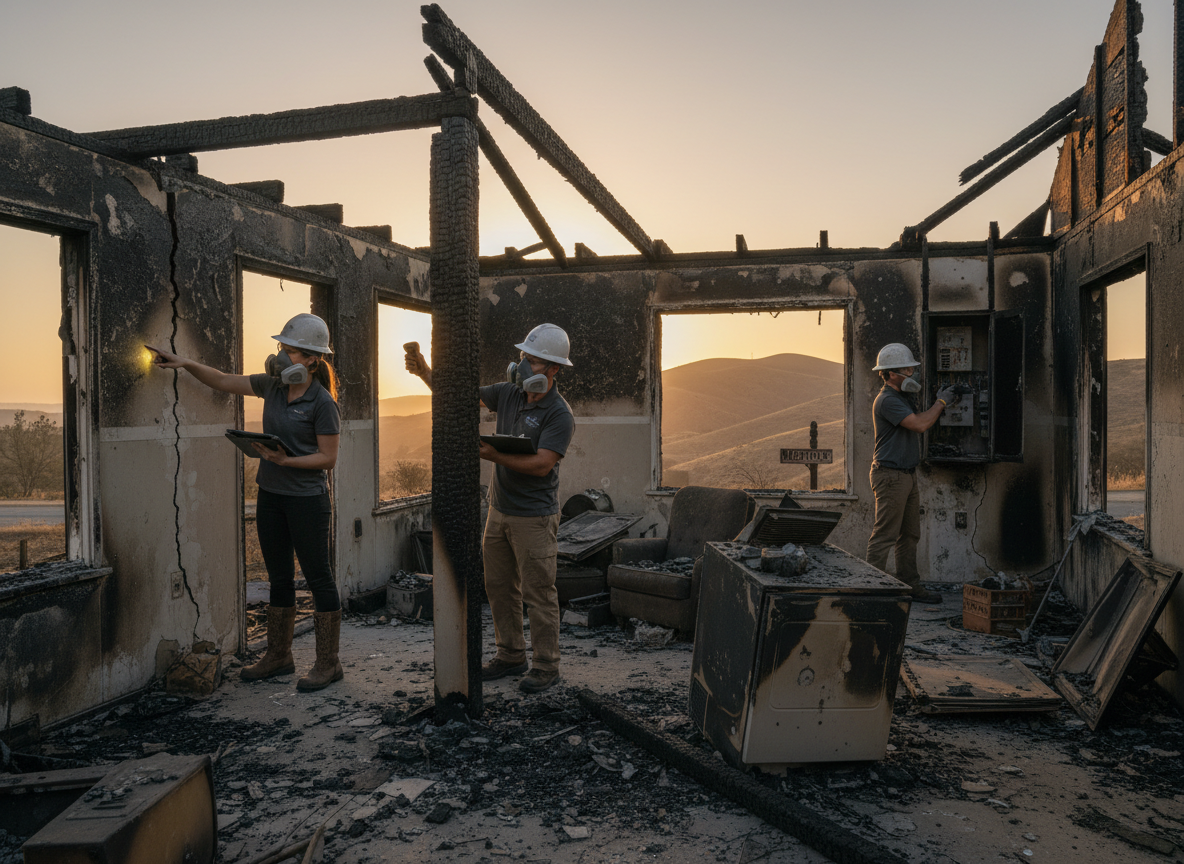
Assessing structural damage after a house fire in Mentone starts with measuring char depth on wood framing and testing for sagging in floors and ceilings, often revealing hidden compromise within 24 to 48 hours of the incident. Homes in Mentone typically feature older wood-frame construction that can lose 30 to 50 percent of load capacity when exposed to sustained heat above 500 degrees. San Bernardino County properties near Zanja Creek face added risks from variable soil moisture that accelerates foundation settling after fire suppression water saturates the ground. Initial checks focus on visible distortion rather than cosmetic soot.
Initial Visual Inspection Steps
Walk through each room methodically, noting any doors that no longer close flush or floors that slope more than one inch over eight feet. Use a flashlight to examine attic spaces for darkened joists that indicate heat penetration beyond surface charring. In Mentone's mild Mediterranean climate, hot dry summers leave framing drier and more susceptible to rapid strength loss during fires. Document every crack wider than one-eighth inch with photos and measurements before moving to load-bearing elements. This process identifies immediate safety concerns without specialized equipment.
Inspecting Foundations and Load-Bearing Walls
Foundations in Mentone homes built before 1980 often sit on native soil influenced by Zanja Creek drainage patterns, making them prone to shifting once firefighting water saturates the base. Check for new horizontal cracks in concrete or separation where sill plates meet the foundation. Load-bearing walls show telltale signs when studs bow outward or drywall tape splits along seams. Test stability by applying firm pressure at mid-height; any movement greater than one-quarter inch signals deeper compromise. Properties in nearby Redlands and Yucaipa share similar soil conditions that require the same careful evaluation after fires.
Evaluating Roofing and Floor Systems
Roof structures suffer when trusses lose chord strength from prolonged heat, especially in Calimesa-adjacent areas where summer temperatures exceed 100 degrees and dry out lumber. Look for sagging ridge lines or rafters that no longer align with original plumb lines. Floor systems demand checking subfloor delamination and joist burn-through, particularly around kitchen and bedroom areas where fires commonly start. Measure remaining wood thickness at multiple points; sections reduced below two inches often need replacement. These assessments tie directly into decisions about structural repair after fire.
Local Climate and Terrain Influences
Mentone's cool winters combined with hot dry summers create seasonal swings that widen existing fire-induced cracks in stucco and drywall. Terrain near Mentone Park funnels wind during Santa Ana events, increasing oxygen flow that deepens char into structural members. Soil along Zanja Creek retains moisture longer than upland areas, raising the risk of post-fire mold if water from suppression efforts is not extracted promptly. Homeowners in Yucaipa and Calimesa encounter the same patterns, making consistent inspection protocols essential across San Bernardino County.
Next Steps After Initial Assessment
Compare findings against original building plans when available, focusing on changes to shear walls and header spans. Handling Water Damage from Firefighting in Mentone Properties outlines how residual moisture accelerates wood decay in the weeks following a fire. Engage a licensed structural engineer for any deflection exceeding one-half inch or when multiple load paths appear compromised. This measured approach prevents unnecessary demolition while protecting residents from hidden hazards in the region's older housing stock.