2026-10-16 ·
Handling Water Damage from Firefighting in Mentone Properties
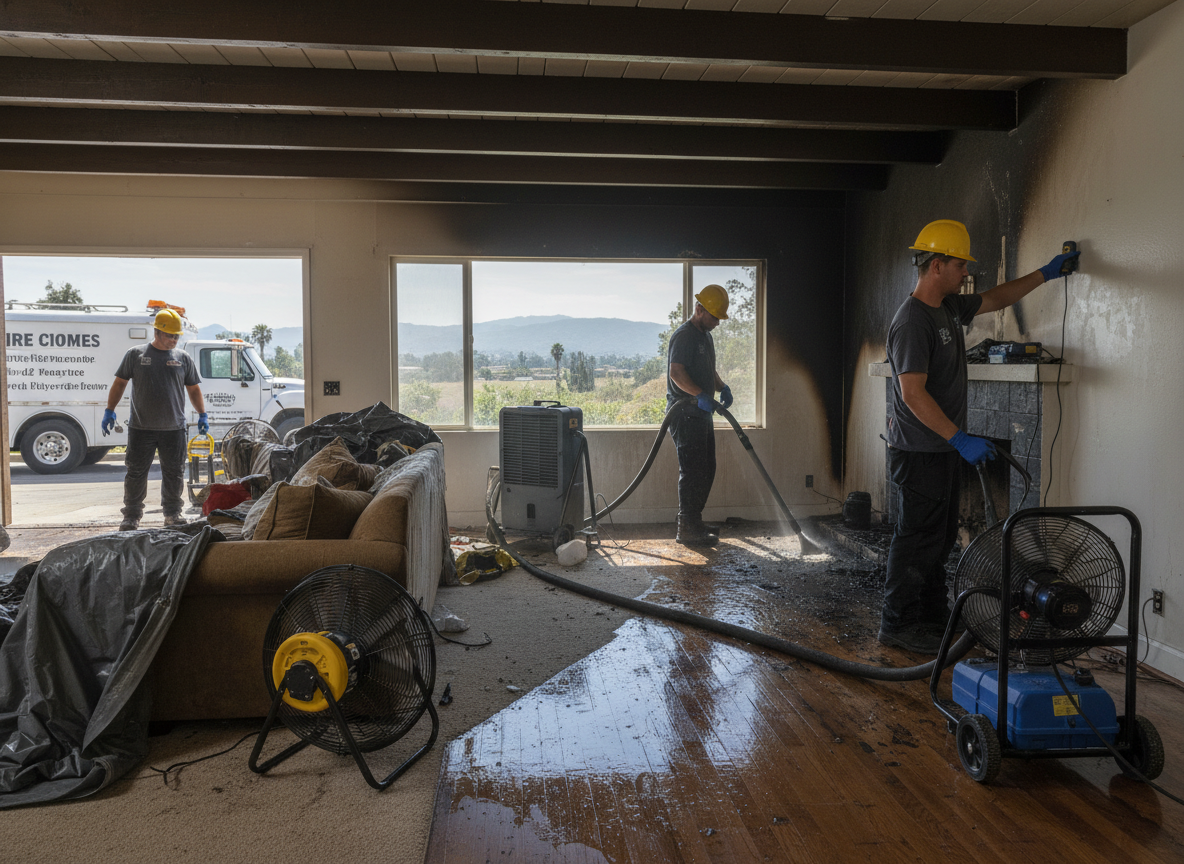
Water damage from firefighting in Mentone properties typically needs professional extraction and drying within 24 to 48 hours to limit mold growth, especially when hot dry summers accelerate evaporation and leave behind concentrated moisture pockets in older wood-frame homes.
Assessing Saturation in Mentone Structures
Mentone homes built decades ago along streets near Mentone Park and Zanja Creek often feature plaster walls and crawl spaces that trap firefighting water for weeks. The mild Mediterranean climate brings cool winters that slow natural drying, allowing moisture to migrate into subfloors and insulation. Crews start with moisture meters to map affected zones, checking drywall up to 18 inches above visible water lines and testing attic insulation that may have absorbed runoff from roof operations. Properties in nearby Redlands and Yucaipa share similar construction, so the same hidden saturation patterns appear after structure fires. Ignoring these readings leads to warped flooring and musty odors that spread through shared wall cavities common in Calimesa border homes.
Extraction and Initial Drying Steps
Technicians use truck-mounted pumps followed by air movers and dehumidifiers rated for 50 to 100 pints per day to pull moisture from Mentone properties. In summer, when temperatures climb above 95 degrees, equipment runs continuously because ambient humidity stays low yet trapped water still feeds mold colonies within 48 hours. Winter jobs require longer run times as cool air holds less moisture, extending drying from five days to eight or more near Zanja Creek where soil stays damp. Technicians place sensors every 10 feet to confirm levels drop below 15 percent moisture content before removing equipment. This measured approach prevents warping in original hardwood floors found in many local single-story homes.
Addressing Mold and Secondary Risks
San Bernardino County summers create ideal conditions for rapid mold once firefighting water sits in wall cavities. Homes near Mentone Park with original lath-and-plaster construction trap moisture behind layers that standard fans cannot reach. Professionals install containment barriers and HEPA filtration to keep spores from migrating into unaffected rooms during demolition. When water reaches electrical boxes or HVAC returns, full system cleaning becomes necessary to avoid distributing contaminants through the house. Properties in Yucaipa and Calimesa face the same seasonal pattern, making consistent monitoring essential for the first two weeks after any fire event.
Coordinating Repairs with Local Conditions
After drying, structural repair after fire crews replace saturated sheathing and reinstall insulation matched to current R-values required in San Bernardino County. Fire and flood restoration teams often handle both the water and any smoke residue in one visit, reducing repeat disruption for homeowners along 1930 Mentone Blvd corridors. For lingering effects, see Removing Lingering Smoke Odor from Mentone Homes and Protecting Mentone Homes During Peak Wildfire Season. Final walkthroughs verify every room meets dry standards before reconstruction begins.
When Professional Help Is Required
Owners should contact 24/7 teams at 1930 Mentone Blvd, Mentone, CA 92359 whenever water reaches more than one room or sits longer than a day. Attempting DIY drying with box fans frequently leaves moisture in subfloors that later causes cupping or adhesive failure under tile. Local crews familiar with Zanja Creek drainage patterns and the area’s older housing stock complete the job faster and with fewer callbacks than general contractors from outside San Bernardino County.